
Encounter with Ely
The RoadThe meeting with the old wanderer Ely, a philosophical dialogue about God, survival, and hope.
increasing Bearing strength in each event
 decreasing
Bearing strength in each eventdecreasingMeeting the Old Man
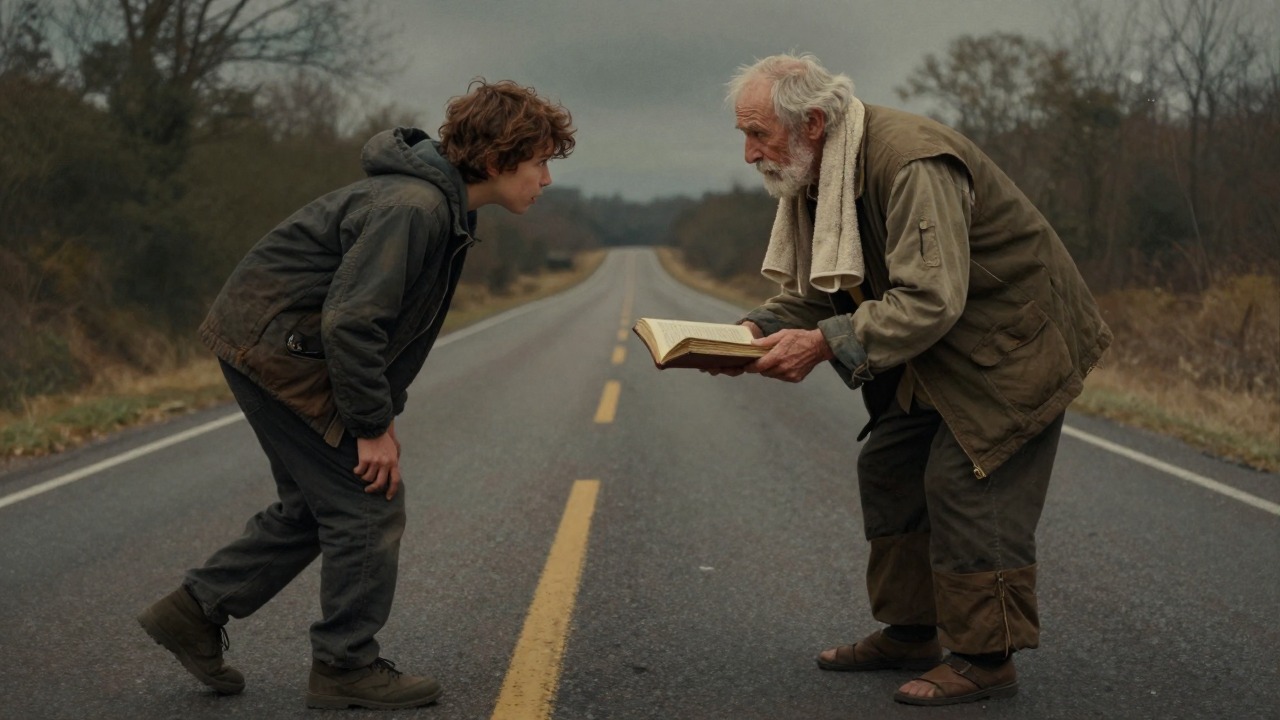
The Figure on the Road
The Approach
They see a small, bent figure shuffling ahead. The boy is worried it might be a decoy. They overtake him: an old man with a filthy towel tied under his jaw, no shoes, wrapped in rags. He smells terrible and says he has nothing.
The First Exchange
The boy offers him a tin of fruit cocktail. The old man eats hungrily. The man is wary, but the boy insists on helping. The old man says his name is Ely, though later he admits it is not.
The Decision to Camp
The man agrees to let the old man eat with them. They build a fire and talk. The old man says he knew this was coming, he always believed in it. He talks about the end of the world and the last god.
The Philosophical Dialogue
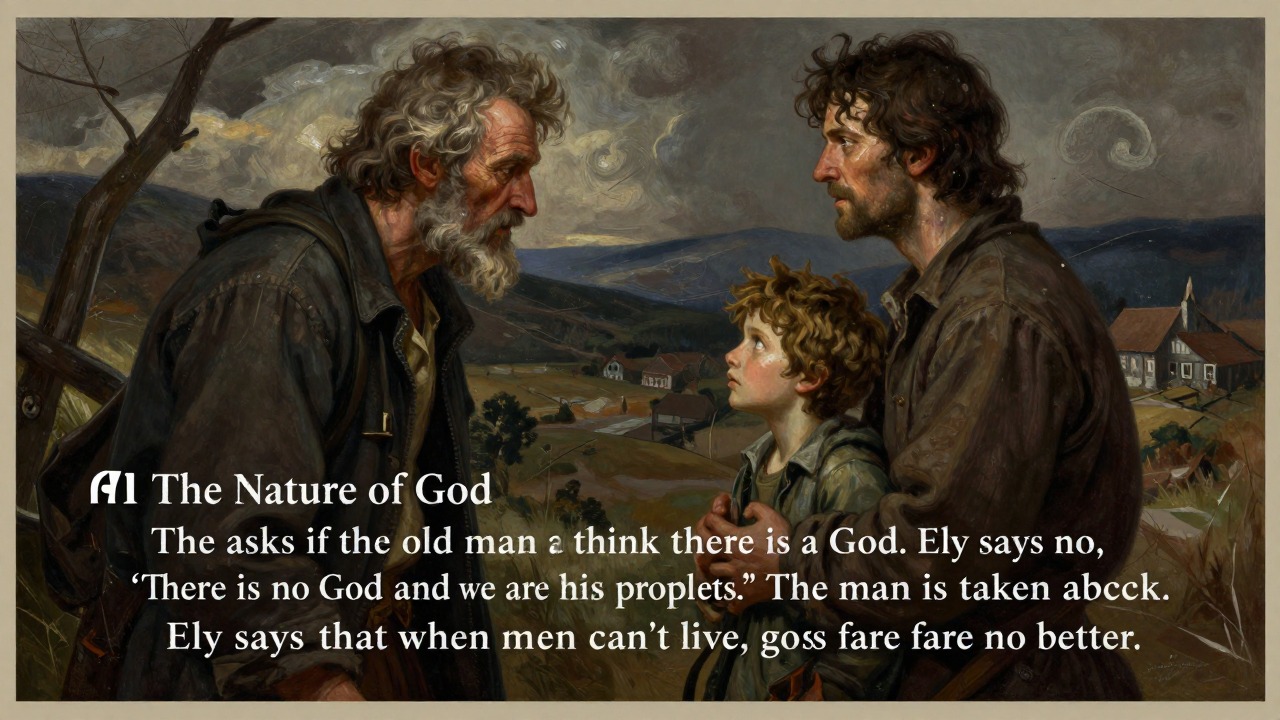
The Argument
The Nature of God
The man asks if the old man thinks there is a God. Ely says no, 'There is no God and we are his prophets.' The man is taken aback. Ely says that when men can't live, gods fare no better.
The Last God
Ely says that if the boy were a god, it would be a terrible thing to be on the road with the last god. The man says things will be better when everybody's gone. Ely agrees: 'We'll all be better off. We'll all breathe easier.'
The Morning After
In the morning, the boy gives Ely some of their food. The man is reluctant but allows it. Ely sets off alone, tapping his cane. The boy never looks back. The man knows Ely will die soon.
mid-journey, after the town with the market
that night by the fire
